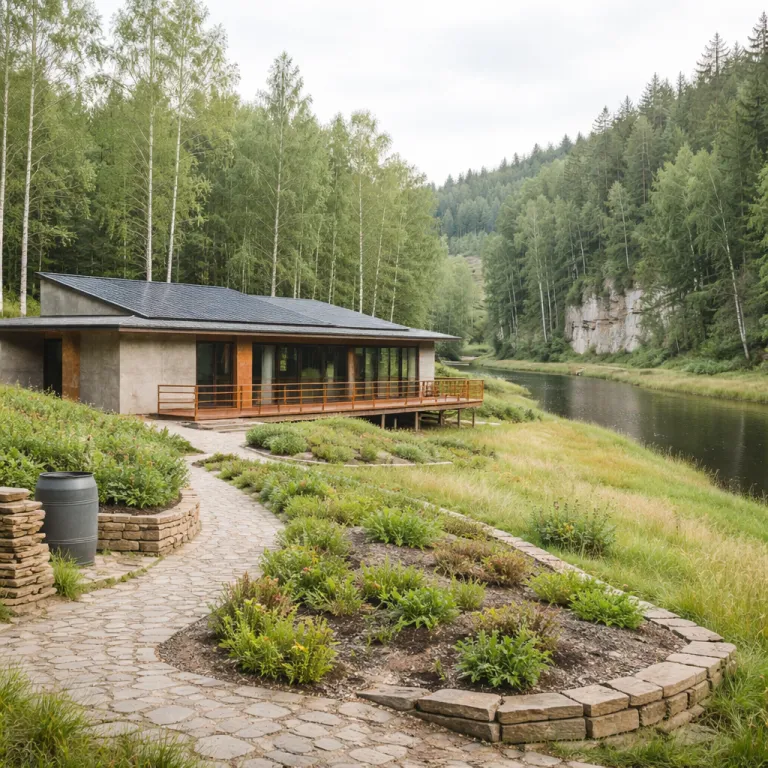
From Riga to Ligatne: a Michelin Green Star journey into the forest
The phrase “pavaru maja ligatne michelin” sounds technical, yet the reality is deeply sensory. It describes a journey from Riga to Līgatne where the road, the forest and the river shape your experience as much as the restaurant itself. You leave the capital’s rhythm behind and enter Gauja National Park, where every bend in the road hints at what will later appear on your plate.
Driving the 80–90 minutes from Riga, you pass pine stands, sandstone cliffs and small farmsteads that quietly explain why Pavāru māja exists here and not in the city. This is not a detour from a Riga hotel stay; it is the reason to book a night in the Gauja valley and let your urban plans orbit around this one meal. For luxury travelers used to quick taxis between city restaurants, the slow approach through the park reframes fine dining as a landscape-driven ritual.
As you cross into Līgatne, the road narrows and the forest thickens, and the idea of a “destination restaurant” becomes literal. The village sits inside the national park, with the Gauja river carving a soft curve below the cliffs and the old paper mill chimneys marking the industrial past. By the time you reach Pilsoņu iela in Līgatne, where Pavāru māja stands, the phrase pavaru maja ligatne michelin feels less like a search term and more like a quiet promise kept.
Understanding the Michelin Green Star at Pavāru māja
Many travelers know the Michelin star system, yet the Green Star remains less understood. A Michelin Green Star recognises restaurants where sustainability is embedded in sourcing, energy use, waste management and staff culture, not just added as a garnish. Pavāru māja in Līgatne is currently Latvia’s only holder of this distinction, listed in the first Michelin Guide Latvia (2023), which makes the pavaru maja ligatne michelin connection uniquely important for anyone planning a high-end stay in the country.
Where a classic star rewards consistency and technical excellence, the Green Star asks harder questions about supply chains, seasonality and long-term impact on nature. At Pavāru māja, chef-owner Ēriks Dreibants and head chef Juris Dukaļskis—both named in the guide’s entry—answer those questions through foraging, close work with local farmers and a low-waste kitchen that treats every stem and peel as potential flavour. A typical tasting menu might include trout from nearby waters with fermented cucumbers, barley risotto with forest mushrooms, or birch-sap sorbet with spruce tips, so the menu reads like a map of Gauja National Park rather than a generic list of luxury ingredients.
For travelers choosing between the many Michelin-listed restaurants in Rīga and this single Green Star in Līgatne, the distinction matters. A dinner here is not only about what you enjoy on the plate; it is about learning how a national park, a small ligatnes pilseta community and a former paper mill town can support a world-class restaurant without compromising their own rhythms. As one regular guest put it after a long lunch, “you taste the forest, but you also taste the people who live with it every day.” That is why pavaru maja ligatne michelin has become shorthand among in-the-know guests for sustainable Baltic luxury.
Forest, river, paper mill: why the setting shapes the experience
To understand Pavāru māja, you need to understand Līgatne itself. This is a ligatne built around a historic paper mill, with workers’ houses, caves and paths that still carry the scent of wood pulp and river mist. The old ligatne paper heritage is not romanticised; it is simply part of the daily view from the restaurant’s windows and from the trails you walk before or after your meal.
The Gauja National Park location means that nature is never a backdrop but a co-author of the experience. You might arrive early and follow a short tour of Līgatne, walking from Pilsoņu iela in Līgatne down towards the river, where sandstone cliffs rise above the water and forest paths lead into quiet stands of spruce. From certain points you can look back towards the ligatnes pilseta rooftops and understand how closely the village, the park and the restaurant are woven together.
Luxury travelers often ask whether they should stay in Rīga and make this a day trip, or base themselves closer in Cēsu novads. The honest answer is that pairing Pavāru māja with an overnight in nearby Cēsis or in pilseta Cēsu gives you time to enjoy both the restaurant and the wider Gauja valley without rushing. If you are used to urban fine dining, this slower rhythm, shaped by the national park and the old paper mill town, becomes part of the pavaru maja ligatne michelin story you will remember.
How the landscape enters the kitchen and the glass
Inside Pavāru māja, the products kitchen is a direct extension of the surrounding forest and gardens. Foraged herbs, berries and mushrooms from Gauja National Park sit alongside vegetables from nearby farms and preserves made in house, so the menu reads like a seasonal diary of Līgatne rather than a static list. The chefs’ work with slow food principles means that each dish respects the pace of the land, whether it is spring birch sap or late autumn roots.
Drinks follow the same logic, with savoury “salt drinks”, infusions and a carefully chosen wine set that echo the forest and river rather than overpower them. You might taste a pairing that matches Baltic white wines with local ferments, or a non-alcoholic sequence where salt drinks and herbal brews mirror the menu’s progression. This is where the pavaru maja ligatne michelin ethos becomes tangible, as every glass reinforces the sense that you are drinking the landscape as much as the cellar.
For travelers who enjoy thoughtful pairings, this approach feels closer to a narrative than a simple beverage list. You learn how a single herb can appear in both a dish and a drink, or how preserved products from the kitchen’s shelves carry summer flavours into colder months. During one spring service, for example, the same spruce tip appeared in a broth, a dessert garnish and a gently sparkling drink, turning a simple ingredient into a thread that tied the whole menu together. It is a quiet, confident way of showing that the restaurant, the garden and the national park are in constant conversation.
Linking city stays and rural tables
If your Latvian itinerary centres on Rīga’s grand hotels, Pavāru māja offers a complementary counterpoint. You might book a refined city stay and consult a detailed restaurant guide for urban dining to calibrate your expectations of service and pacing. Then you drive to Līgatne and realise that the same level of hospitality can exist in a wooden house on Pilsoņu iela, framed by forest instead of façades.
This contrast is part of the appeal for solo explorers who value both design-led hotels and grounded, nature-focused experiences. In Rīga, you might seek out a luxury hotel with a strong art collection and a polished lobby bar; in Līgatne, you trade that for a terrace where the main decoration is the shifting light over the Gauja valley. Both have their place in a well-balanced Latvian journey, and pavaru maja ligatne michelin becomes the rural anchor that keeps the trip from feeling purely urban.
When you later return to the city, perhaps to continue your stay in Rīga or to fly onwards, the memory of that forest meal lingers. It changes how you read other menus, how you think about sourcing and how you weigh the value of a long drive for a single lunch. That is the quiet power of a Green Star restaurant embedded in a national park rather than a capital district.
Seasonal menus, foraging and the rhythm of Gauja National Park
The heart of the pavaru maja ligatne michelin story lies in how the chefs read the seasons. At Pavāru māja, seasonal menus are not a marketing line but a structural necessity, because the forest, the garden and the nearby farms dictate what is possible. This means that a May lunch and a September dinner can feel like two different restaurants, even though the address on Pilsoņu iela in Līgatne never changes.
Chef-owner Ēriks Dreibants and head chef Juris Dukaļskis use foraging and close collaboration with farmers to shape each menu around what Gauja National Park offers at that precise moment. Early in the warm months, you might learn how young spruce tips, nettles and first berries appear in delicate broths and ferments, while later in the season the focus shifts to mushrooms, roots and preserved products from the kitchen shelves. This is slow food in practice, where patience and observation replace the urge to import luxury ingredients from far away.
The Michelin Green Star recognises exactly this kind of long-term commitment to sustainable gastronomy. Officially, “What is a Michelin Green Star?” and “Award for sustainable gastronomy.” sit side by side in the guide’s own explanation, and Pavāru māja embodies that definition with unusual clarity. For travelers comparing the many restaurants in the Michelin Guide Latvia, this single Green Star in Līgatne stands out because it proves that fine dining can be both indulgent and responsible.
A May to September itinerary for solo explorers
Plan a May to September trip and you can build a graceful arc around Pavāru māja and the wider Gauja valley. Start with a night in Cēsis or pilseta Cēsu, where cobbled streets, a medieval castle and small galleries offer a gentle urban counterpoint to the forest. From there, the drive into Cēsu novads and down towards Līgatne takes less than an hour, leaving time for a short walk in the park before lunch.
Book a midday or early afternoon table at Pavāru māja so you can enjoy the full tasting menu without rushing back to the city. A seasonal tasting with drink pairings typically falls in the mid to upper double digits per person in euros, depending on the exact format, so it helps to plan this as a highlight meal in your budget. After your meal, follow a tour of Līgatne that includes the old paper mill area, the river ferry and the network of caves carved into the sandstone cliffs, all within easy walking distance. Then either return to your Cēsis hotel for a second night or continue towards Rīga, arriving in time for a late evening check-in at one of the capital’s luxury properties.
If you are mapping your restaurant choices across Latvia, it helps to understand how Pavāru māja fits into the broader Michelin landscape. There are more than thirty restaurants in the Michelin Guide Latvia, with several concentrated in Rīga and a handful outside the capital, and recent coverage of openings such as Smor Bistro shows how the scene continues to evolve. Against this backdrop, the pavaru maja ligatne michelin pairing of Green Star status and national park setting remains unique, which is why it deserves a dedicated day in any serious food-focused itinerary.
Why a Green Star in the forest matters for luxury travelers
For guests used to classic luxury markers, from marble lobbies to white tablecloths, a wooden house in Līgatne might seem like a modest setting. Yet the combination of precise cooking, thoughtful service and deep engagement with nature offers a different kind of richness, one that aligns closely with contemporary ideas of sustainable luxury. You are not only paying for technique; you are investing in a system that supports local farmers, respects the park and keeps traditional knowledge alive.
This is where the pavaru maja ligatne michelin narrative intersects with broader trends in high-end travel. Many guests now seek experiences that feel grounded and specific, rather than interchangeable with any other European destination, and Pavāru māja delivers that through its tight focus on Līgatne, Gauja National Park and Latvija’s northern forests. The Green Star acts as an external validation of this approach, reassuring travelers that their indulgence is aligned with credible sustainability standards.
When you leave, you carry more than a memory of flavours. You carry a clearer sense of how a small restaurant in ligatnes pilseta can influence conversations about sustainability across the country, and how your own choices as a traveler can support or undermine that work. That awareness, quietly gained over the course of a long lunch, is perhaps the most valuable course on the menu.
Designing your stay: hotels, timing and private experiences
Planning a trip around Pavāru māja means thinking carefully about where you sleep before and after your meal. If you are flying into Rīga, start with one or two nights in a central luxury hotel, using a detailed guide to the city’s grandest accommodations to choose a property that matches your style. Once you have settled into Latvija’s capital, you can then pivot towards the forest, treating the drive to Līgatne as a deliberate shift in tempo.
From Rīga, the route through Gauja National Park offers several worthwhile pauses, especially for solo travelers who enjoy unstructured exploration. Stop near Sigulda for a short walk to a river view, or detour towards Turaida Castle for a dose of history before continuing towards Cēsu novads and the turnoff to Līgatne. These small breaks make the journey feel like a curated experience rather than a simple transfer between city and restaurant.
Once in Līgatne, you can choose between staying locally in the village or returning to Cēsis or Rīga after your meal. For those who value quiet evenings, a guesthouse near the park entrance allows you to wake up with forest light and perhaps fit in a morning walk before heading back to the city. Whatever you choose, the key is to allow enough time around your pavaru maja ligatne michelin reservation so that the day feels spacious, not compressed.
Private events, gift cards and tailored experiences
Pavāru māja is not only a destination for individual diners; it also hosts private events that make full use of its setting and philosophy. If you are planning a small celebration or corporate retreat, you can arrange a private event where the menu, wine set and pacing are tailored to your group, often with elements of foraging or garden visits built into the day. This kind of gathering feels very different from a hotel conference room, because the national park and the old paper mill town remain present in every pause between courses.
For travelers who want to share the experience with others, a gift card from Pavāru māja can be a thoughtful way to introduce friends or family to the restaurant. These events gift options often pair a tasting menu with drinks, and sometimes include extras such as a short tour of Līgatne or a guided walk in the nearby park. When used as part of a wider itinerary, a gift card can anchor a trip to Latvija around a single, memorable meal.
The restaurant also engages with events sustainability, ensuring that private events respect the same sourcing and waste reduction principles as regular services. This means that whether you are booking a solo lunch or a larger gathering, the pavaru maja ligatne michelin standards remain consistent. For luxury travelers who care about the impact of their celebrations, that continuity of values can be as important as the quality of the food and wine.
How Pavāru māja fits into a broader Latvian hotel strategy
When you look at your Latvian trip as a whole, Pavāru māja becomes one of several anchor points rather than an isolated outing. In Rīga, you might choose a grand hotel with strong concierge services, using their knowledge to arrange transfers and timing for your Līgatne day. In Cēsis, a smaller design-forward property can offer a more intimate base for exploring Cēsu novads and the surrounding park.
Our own perspective at mylatviastay.com is shaped by repeated stays across these regions, from riverside guesthouses to central city suites. We have seen how a single meal at Pavāru māja can recalibrate a guest’s expectations of what Latvian hospitality can be, especially when paired with thoughtful hotel choices. That is why we often recommend building at least one full day around the pavaru maja ligatne michelin experience, rather than trying to squeeze it into a packed city schedule.
If you are a solo explorer, this structure offers a satisfying balance between independence and curation. You retain control over your routes, stops and hotel picks, yet you also benefit from the clear focal point that a Green Star restaurant provides. The result is a trip that feels both self-directed and quietly guided by the landscape, the kitchen and the rhythm of the Gauja valley.
From kitchen products to online store: extending the experience at home
One of the subtle pleasures of Pavāru māja is how it lets you carry a piece of Līgatne home. The products kitchen produces preserves, ferments and other items that sometimes appear in an online store, allowing guests to restock flavours they first encountered in the tasting menu. This bridge between the restaurant and your own kitchen keeps the pavaru maja ligatne michelin experience alive long after you have left Gauja National Park.
When you browse these products, you will often find ingredients that reflect the same slow food philosophy as the restaurant’s seasonal menus. Jars of pickled forest mushrooms, syrups made from birch sap or spruce tips and carefully blended teas all speak of specific walks, seasons and foraging trips in and around Līgatne. Using them at home becomes a way to revisit the forest, even if you are cooking in a city apartment far from Latvija.
For travelers who enjoy thoughtful souvenirs, this approach feels more meaningful than a generic magnet or postcard. You are not just buying a product; you are investing in the same network of farmers, foragers and artisans that supports the restaurant itself. That alignment between what you eat on site and what you take away reinforces the integrity of the pavaru maja ligatne michelin story.
Events online, education and learning from afar
Pavāru māja occasionally extends its reach through events online, sharing elements of its philosophy with guests who cannot immediately travel to Līgatne. These might include virtual tastings, talks about foraging or sessions focused on events sustainability, all rooted in the daily reality of running a Green Star restaurant inside a national park. For frequent travelers, such content can be a useful way to learn before planning an in-person visit.
Engaging with these online events allows you to understand how the team thinks about menu design, waste reduction and collaboration with local producers. You might learn, for example, how a specific herb from the garden appears in both a salt drink and a dessert, or how the chefs adapt when a foraged ingredient is scarce in a given season. This kind of transparency deepens trust, because it shows that the pavaru maja ligatne michelin standards are not confined to the dining room.
For solo explorers who enjoy research and anticipation, following these events online can turn the eventual visit into a richer experience. You arrive not as a blank slate, but as someone who already understands the contours of the restaurant’s relationship with Līgatne, Gauja National Park and the wider region. That familiarity makes the first walk up Pilsoņu iela in Līgatne feel less like a step into the unknown and more like a long-awaited meeting.
Why Pavāru māja belongs on every serious Latvian itinerary
In a country where Rīga understandably dominates many travel plans, it can be tempting to keep all your meals within the city limits. Yet the existence of a Michelin Green Star restaurant in Līgatne changes that calculation for anyone who cares about food, sustainability and landscape. Pavāru māja proves that world-class dining can thrive in a small ligatnes pilseta, provided it is deeply rooted in its surroundings.
When you weigh your options, remember that the pavaru maja ligatne michelin pairing offers something no urban restaurant in Latvija can fully replicate. It combines a national park setting, a historic paper mill town, a foraging-driven menu and a clear, externally recognised commitment to sustainable gastronomy. For luxury and premium travelers, that combination justifies the drive, the planning and the decision to step beyond the capital’s comfort zone.
If your goal is to build a Latvian itinerary that feels both refined and authentic, Pavāru māja should sit alongside your chosen Rīga hotel and your favourite Cēsis guesthouse as a non-negotiable anchor. It is not just a place to eat; it is a lens through which to view Gauja National Park, Līgatne and the evolving story of Latvian hospitality. Once you have sat at one of its tables and looked out towards the forest, the phrase pavaru maja ligatne michelin will mean something very specific, and very personal.
FAQ
What is a Michelin Green Star and how does Pavāru māja qualify?
A Michelin Green Star is an award for sustainable gastronomy, recognising restaurants that integrate environmental responsibility into sourcing, energy use and waste management. Pavāru māja in Līgatne qualifies through its seasonal menus, foraging, close work with local farmers and low-waste kitchen practices, as described in its Michelin Guide Latvia entry. Its location inside Gauja National Park reinforces this commitment, because the surrounding landscape directly shapes what appears on the plate.
Where exactly is Pavāru māja located in Līgatne?
Pavāru māja is located at Pilsoņu iela 2 in Līgatne, a small town within Gauja National Park in the Vidzeme region of Latvia. The restaurant sits near the historic paper mill area and within walking distance of river viewpoints and forest trails. This central yet quietly rural position makes it easy to combine a meal with a short tour of Līgatne and the surrounding park.
How long does it take to drive from Rīga to Pavāru māja and is it worth the trip?
The drive from central Rīga to Pavāru māja in Līgatne typically takes around 80–90 minutes, depending on traffic and stops. Many travelers consider it well worth the journey, because the route passes through Gauja National Park and offers opportunities for walks, viewpoints and cultural stops in places like Sigulda or Cēsis. For guests interested in sustainable fine dining and landscape-driven experiences, the combination of drive and meal becomes a highlight of their Latvian trip.
Can I combine a visit to Pavāru māja with an overnight stay nearby?
Yes, and it is often the most relaxed way to experience the restaurant. Many guests pair lunch or dinner at Pavāru māja with an overnight stay in Cēsis, in pilseta Cēsu or in a guesthouse near Gauja National Park, allowing time for walks and sightseeing before or after the meal. This structure avoids rushing back to Rīga and lets you enjoy both the restaurant and the surrounding landscape at a comfortable pace.
Do I need to book Pavāru māja far in advance?
Advance reservations are strongly recommended, especially during the warmer months when more travelers visit Gauja National Park. As Latvia’s only Michelin Green Star restaurant, Pavāru māja attracts both local guests and international visitors, so last-minute tables can be difficult to secure. Booking ahead—directly with the restaurant via its online reservation system or contact details—also allows you to plan your hotel stays and transport around the booking, ensuring a smoother overall itinerary.